Romania ONJN Licence: Requirements and Annual Costs
A practical guide to operator permissions, supplier licensing and the budget required to enter Romania’s online market.
Short answer
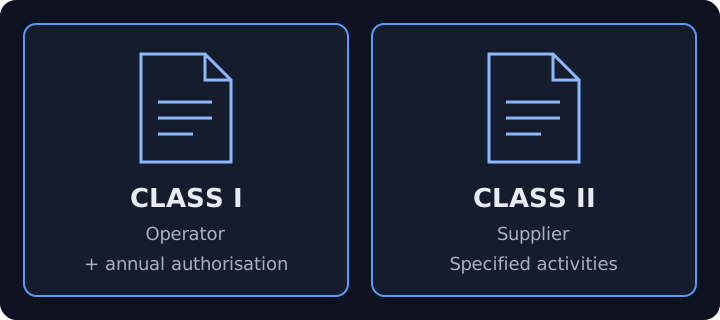
- Separate operator and supplier licences: Class I operators also need annual authorisation; Class II covers specified supplier services.
- Class I annual charges start at €1.28 million: this three-charge calculation excludes capital, guarantees and operating costs.
- A ten-year licence still carries annual obligations: local arrangements, system certification and player protection remain essential.
An online operator serving Romania generally needs both a Class I organisation licence and an operating authorisation from Oficiul Național pentru Jocuri de Noroc (ONJN). The organisation licence generally lasts ten years; the operating authorisation lasts one year. Product scope and annual obligations therefore matter as much as the licence number. OUG 77/2009
Suppliers follow a different route. Class II covers specified activities supporting the market, such as platform administration, hosting, software production or distribution, affiliate services, and testing or certification. It does not authorise a supplier to accept consumer wagers. HG 111/2016 implementing norms
| Business role | Permission to examine | What it covers |
|---|---|---|
| B2C online operator | Class I licence plus annual operating authorisation | The approved consumer-facing products and operating scope |
| Platform, software or other regulated supplier | Class II licence for the applicable activity | Specified support services, not consumer wagering |
| Business providing more than one regulated service | Each applicable activity and its conditions | A single business description does not settle every permission required |
For a cross-border launch, map the product and commercial role before choosing the entity or technology contracts. Our guide to B2B business boundaries explains why an infrastructure role and an operator role require separate analysis.
What Romanian presence must an applicant establish?
Eligible structures include Romanian companies and EU, EEA or Swiss entities operating through a Romanian permanent establishment. Relevant income must be attributed to that establishment, and foreign applicants need a Romania-based representative with sufficient authority. A foreign incorporation certificate alone does not satisfy these arrangements. OUG 77/2009, Article 1; OUG 82/2023
The application also addresses ownership, management, probity, capital, financial guarantees and technical readiness. These should be treated as one operating plan: who holds the licence, how the activity and income are recorded and attributed, which suppliers perform regulated services and how ONJN can supervise the system. HG 111/2016
How much are the recurring Class I charges?
As checked on 3 November 2026, three recurring charges for remote Class I operators produce a calculated minimum of €1.28 million a year. This is the sum of the three items below, not an official all-in quotation or a complete launch budget. OUG 77/2009, Article 10 and annex
| Recurring charge | Amount and basis |
|---|---|
| Organisation-licence fee | €300,000 annually |
| Operating-authorisation fee | 30% of statutory gaming revenue, with a €480,000 annual minimum |
| Separate annual contribution | €500,000 |
The calculation is €300,000 + €480,000 + €500,000 = €1,280,000. The authorisation component rises above its minimum when the revenue-based charge exceeds it. The 30% rate and €480,000 minimum apply from 1 August 2025; older 21% figures should not be used as the current rate. Law 141/2025
Statutory gaming revenue is not total stakes or accounting profit. The basic calculation deducts awarded prizes from participation receipts, with a commission-based treatment for relevant products. Corporate taxes, technical costs and other applicable levies require a separate budget. OUG 77/2009, Article 1¹
What do Class II suppliers pay?
The listed Class II activities carry an annual licence fee of €20,000 per applicable activity. Licensed Class II legal persons also owe a separate €15,000 annual contribution. Identify the actual activities before budgeting: platform administration, software and affiliate services should not be assumed to fit under one fee merely because one company provides them. OUG 77/2009, Article 10 and annex
A Class II licence also carries restrictions on supporting unauthorised local-facing activity. The consolidated law includes location-verification and unlicensed-site restrictions for specified suppliers, including amendments effective in December 2025. The licence should be assessed together with the customer, service and territory involved. OUG 77/2009, Article 1
How do capital and guarantees affect the budget?
Capital and guarantees are separate from the recurring fees. The statutory minimum paid-up capital for the online category is RON 1 million. State-budget risk guarantees are €2 million for non-casino remote activity and €5 million for online casino under the rules applying from 1 January 2025. OUG 77/2009, annex, point 2(H), and Article 29
For a mixed-product offering, assess the applicable requirements across the full product scope. Do not assume that the largest single-category guarantee automatically covers every additional activity. The recurring-charge calculation above excludes both capital and guarantees, as well as the cost of arranging them.
What must be ready before the application is complete?
The operating model must support certification, regulatory access and player protection. Requirements include system certification, regulatory data access through the required mirror and safety-server arrangements, audit trails and approved software versions. The precise server configuration depends on the permitted architecture. Player-account arrangements and protection of player funds are distinct from guarantees securing obligations to the state. OUG 77/2009, Article 15; HG 111/2016
The controls also include age and identity checks, Romanian-language disclosures, player-set limits, exclusion tools and time reminders. The practical task is to show how these controls work across the platform, suppliers and customer support, rather than simply listing policies in an application. HG 111/2016
The statutory 30-day decision period begins with a complete application. It is not a guaranteed 30-day launch: preparation, certification and requests for further information can extend the project. OUG 77/2009, Article 1(4)
How should you check an operator or supplier?
Match the legal entity, licence class, approved activity and relevant dates. For an operator, check the annual operating authorisation as well as the longer organisation licence. A brand name or website footer alone does not establish the full current scope.
A useful review file includes the applicable ONJN register entry, the relevant decision and any evidence needed to establish when annual authorisation became effective. Record what was actually verified and when. A historical approval should not be presented as proof that no later restriction or regulatory action exists.
This guide does not certify any named brand’s current authorisation. The ONJN register endpoints could not be reliably retrieved during this review; the legal framework above was checked separately against official legislation.
Frequently asked questions
Does a Romanian licence cover other EU markets?
No automatic mutual recognition applies to gambling authorisations across the EU. Each target market requires its own assessment. The European Commission’s gambling case-law overview explains this limit.
Is the online guide enough for a retail project?
No. Retail premises and product-specific local requirements need a separate review. This guide focuses on remote activity; it should not be used as a complete checklist for a physical venue. HG 111/2016
For the wider planning process, see the licensing service and the Australia online-wagering guide, which illustrates another market where product scope determines the relevant permission.
Official sources
- Romanian legislation portal — consolidated OUG 77/2009legislatie.just.ro
- Romanian legislation portal — HG 111/2016 implementing normslegislatie.just.ro
- Romanian legislation portal — OUG 82/2023legislatie.just.ro
- Romanian legislation portal — Law 141/2025legislatie.just.ro
- European Commission — gambling case lawsingle-market-economy.ec.europa.eu
Checked on 3 Nov 2026. Rules, fees and forms change; confirm the current position before acting.