How to Write a Statement of Work for Cross-Border Services
A worked data migration example shows how to link scope, acceptance, change approval and invoicing without confusing them.
Short answer
- A cross-border statement of work should specify what the supplier will deliver, what the customer must provide, who accepts the work against which criteria, when the supplier can invoice and payment is due, and how both parties approve changes to scope, price and dates.
- Fix work that fails the agreed requirements; use a change request to price, schedule and approve work beyond them.
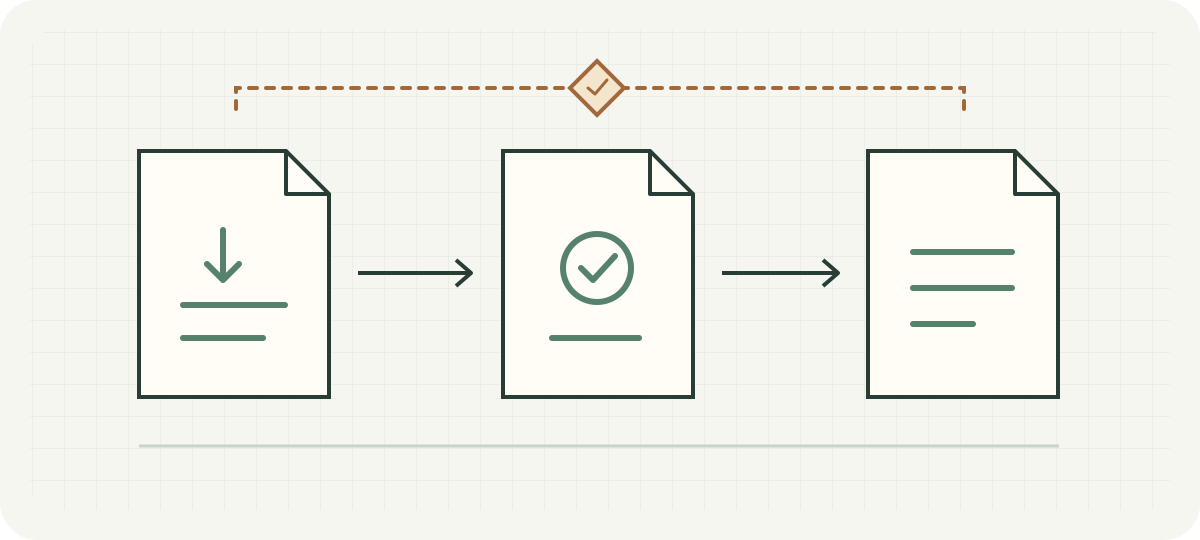
In a cross-border services agreement, use the statement of work (SOW) to say what gets delivered, what the customer must provide, who decides whether the work meets the agreed criteria, when the supplier can invoice and when payment is due, and who approves extra work. For a data migration, an agreed reference field missing from the new system is a defect to fix and retest. A customer request to migrate a second source is a proposed change. Agree its scope, fees, dates and tests before starting it.
What belongs in the scope of work?
Name the parties, the deliverables and their format, included work, exclusions, milestones and the inputs each side owes. Set one owner and due date for each dependency. The NSW government ICT contracting guide shows how a public buyer can put customer inputs, milestones and acceptance tests in an SOW. Use it as a drafting reference, not as the rules for your deal.
In the fictional migration, the supplier imports data from one named source into one target system and hands over the migrated data and a reconciliation report. The customer supplies the agreed field mapping, representative test data and access by specified dates. Legacy-data cleansing and a second source are excluded. If the customer is late with an input, the supplier records which milestone is affected, gives notice, and follows the agreed process for updating dates or fees.
Distinguish a promised deliverable from work that calls for reasonable efforts. The UNIDROIT Principles, arts. 5.1.4–5.1.5 provide a model for that distinction. For example, delivering the agreed report is different from assisting the customer in obtaining a third party’s clearance. State which obligation is intended. The Principles do not automatically govern a contract because it is cross-border.
How do you make acceptance testable?
Define the test data, criteria, tolerances, evidence, authorised approver, response deadline and time zone. Say how the customer reports a failure and how the supplier corrects it and submits the work for retesting. The UK Model Services Contract buyer guidance, section 2.5, is a public procurement example of separating test plans, specifications, reports and milestone certification.
In this SOW, the approver uses the reconciliation report to check that the target count equals the source count after agreed exclusions, and that each in-scope reference field has been transferred. The report names the mapping version, test data and any discrepancies. If an agreed reference field is missing, the approver identifies the failed criterion and the affected records; the supplier fixes the issue and reruns the agreed tests. Running a pilot or beginning to use the output does not itself count as acceptance under this example. The named approver issues written acceptance for the identified version after the work meets the agreed criteria.
When can the supplier invoice, and when is payment due?
Write two triggers. In this example, written acceptance for the milestone lets the supplier issue the invoice. Receipt of an invoice that meets the contract requirements starts the agreed payment period. Specify the currency, invoice recipient, required references and how the parties raise billing disputes. If the parties want an upfront fee or separate payment for undisputed milestones, write those triggers separately. The example does not prescribe a legal payment default.
How do you approve extra work?
Record the request and its impact before starting the change. A second source needs a revised scope, price, delivery date and acceptance tests. Identify who on each side can approve these terms, which written channel they must use and which version the parties will work from. Compare section 4.2 of the UK buyer guidance for a public procurement illustration of impact assessment and authorisation.
Keep a written approval process and follow it in practice. Article 2.1.18 of the UNIDROIT Principles illustrates why a written-form requirement is not an absolute shield: a party’s conduct may prevent it from invoking the requirement to the extent the other party reasonably relied on that conduct. The actual effect depends on the applicable law and facts.
Frequently asked questions
Does the SOW override the master agreement?
Do not assume so. Identify the versions of the master agreement, SOW, attachments and approved changes, then specify their order of precedence. If a change is meant to override a clause, identify the exact clause and confirm that the people approving it have authority to do so.
Does choosing a court or arbitration select the governing law?
Specify governing law and the dispute forum separately. Article 4 of the HCCH Principles illustrates that a choice of court or arbitral tribunal is not by itself a choice of law. These Principles are guidance, not a universal binding rule.
What if the teams will use two contract languages?
Align defined terms, roles, dates and version numbers across both texts. Agree which version controls if they differ, subject to applicable law. For wider issues beyond the SOW, see five clauses to check in a business contract.
Official sources
- NSW Government MICTA/ICTA user guide, sections 4.2 and 4.4www.info.buy.nsw.gov.au
- UK Model Services Contract buyer guidance, sections 2.5 and 4.2www.gov.uk
- UNIDROIT Principles 2016, arts. 2.1.18 and 5.1.4–5.1.5www.unidroit.org
- HCCH Principles on Choice of Law, art. 4www.hcch.net
Checked on 27 Nov 2026. Rules, fees and forms change; confirm the current position before acting.